Robert Swan, OBE
Robert Swan is the first person to walk to both the South and North Poles. He has dedicated his life to protecting Antarctica, mitigating climate change and promoting sustainable technologies and lifestyles.
Biography
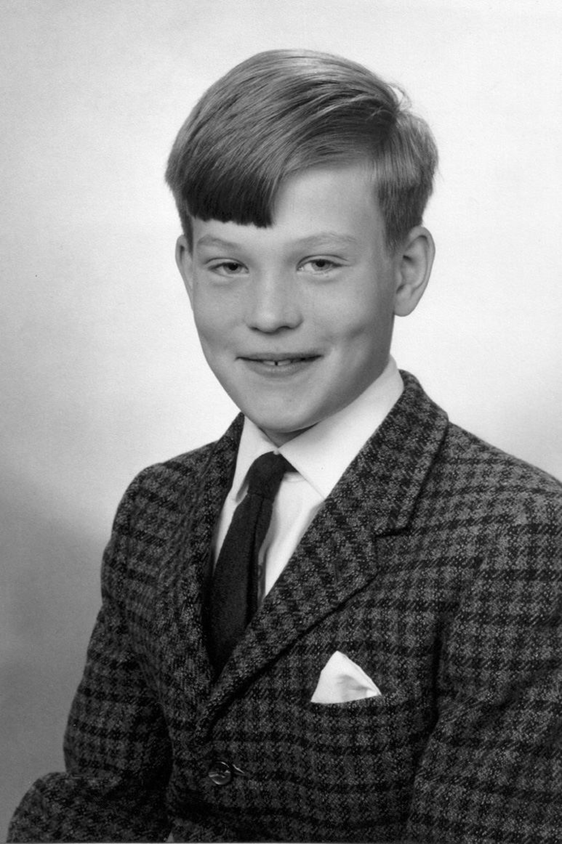
On Christmas Day in 1966, an 11-year-old boy in Yorkshire, England, declared he would walk to the South and North poles. When Robert Charles Swan was a young man in the mid- and late-1980s, he kept that promise and walked 900 miles to the South Pole and 700 miles to the North Pole, crossing the coldest and most inhospitable environments on Earth. No other human before had walked to both poles, and that achievement was just the beginning for Robert.
The youngest member of a large family, Robert learned early about the importance of honor, truth and respect. His maternal uncle sparked the realization that each generation is merely a temporary steward of the Earth. His fascination with polar explorers was born when he saw the film “Scott of the Antarctic,” and he immersed himself in stories of the Heroic Age of Antarctic Exploration and the lives of his heroes: Robert F. Scott, Ernest Shackleton and Roald Amundsen.
After graduation from Sedbergh boarding school, Robert rejected the family tradition of attending Oxford, prompting his father to end further financial support. Robert labored on British construction sites before moving to South Africa, where he hatched a plan to ride a bicycle from Cape Town to Cairo. To raise funds, he drove a taxi in Cape Town and eventually pedaled through 10 countries, dodging two wars and contracting sleeping sickness along the way. Finishing his trans-Africa journey by train, he returned to Britain to attend Durham University and graduated in 1979 with a bachelor’s degree in ancient history.
Robert operated a logging and tree-surgery business for awhile and began dreaming of Antarctica in earnest. In 1979, on the advice of an aristocratic family friend, he developed a budget and a plan to retrace the polar route of Captain Scott, whose team reached the South Pole in 1912 but perished during their return.
At age 25, Robert set about raising $5 million (U.S.) for the expedition. At age 30, he had raised no money. Even so, he had rented a London warehouse on the Thames as his headquarters and had named his expedition "In the Footsteps of Scott".
The money tide turned when oceanographer and documentarian Jacques Cousteau offered his support. Cousteau’s faith opened the door for Robert’s subsequent accomplishments. Ultimately, more than 1,000 sponsors contributed $5 million to purchase supplies and a ship, which Robert christened “Southern Quest.” He also convinced about two dozen volunteers to devote up to three years of their lives to the expedition.
Since walking to both Poles in the 1980s, Robert has traveled the world continuously, presenting to presidents at world summits and children in elementary classrooms. He’s biked across India, sailed around Africa and across the globe, and addressed business and civic audiences worldwide. His expeditions and adventures include:
1986: “In the Footsteps of Scott” South Pole expedition
70 days and 900 miles
In February 1985, with the Antarctic winter approaching, “Southern Quest” and its volunteer crew arrived near Captain Frost’s 1912 base camp (near McMurdo Station). The crew built a mostly prefabricated hut for five individuals who would stay through winter: Robert Swan, Roger Mear, Gareth Wood, John Tolson and Dr. Michael Stroud.
The following summer, in November 1985, Swan, Mear and Wood set out to ski 900 miles to the Geographic South Pole, each hauling 350 pounds of food and supplies on their sleds.
On January 11, 1986 -- after 70 days of walking without radio communications or emergency support -- the team arrived at the Geographic South Pole. Meanwhile, Southern Quest had returned to retrieve the basecamp team.
On that same day, Southern Quest sank after being caught and crushed by pack ice. All crew members escaped, but Robert and team could not immediately meet their commitment to remove all traces of the base camp. With help from Greenpeace, the site was entirely cleaned in 1987.
1989: “Icewalk” North Pole expedition
56 days and 700 miles
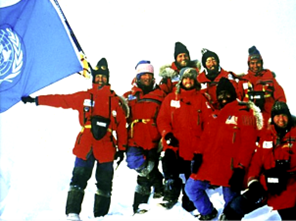
Rob assembled a team of eight people from seven nations: Graeme Joy of Australia, Arved Fuchs of Germany, Hiroshi Onishi of Japan, the Inuit Angus Cockney, Dr. Misha Malakhov of Russia, Rupert Summerson of the UK, and Daryl Robert of the U.S.
Walking on ice-covered seas, and more than 600 miles from land, the ice began to melt and break up much earlier than usual. Winds pushed the broken ice south as the team headed north.
To meet travel goals, the team adopted 40-hour days of walking, at a time of 24-hour sun.
10 miles from their destination, the winds changed, and the ice came together. They reached the North Pole on May 14, 1989.
1996-1997: “One Step Beyond, the South Pole Challenge” cleanup
Robert organized teams of volunteers to remove and recycle 1,500 tons of waste from Bellingshausen Station on King George Island off the Antarctic Peninsula. The effort required eight years to complete and allowed native penguins to reclaim the beach for the first time in almost 50 years.
2002: “2041 Overland Journey”
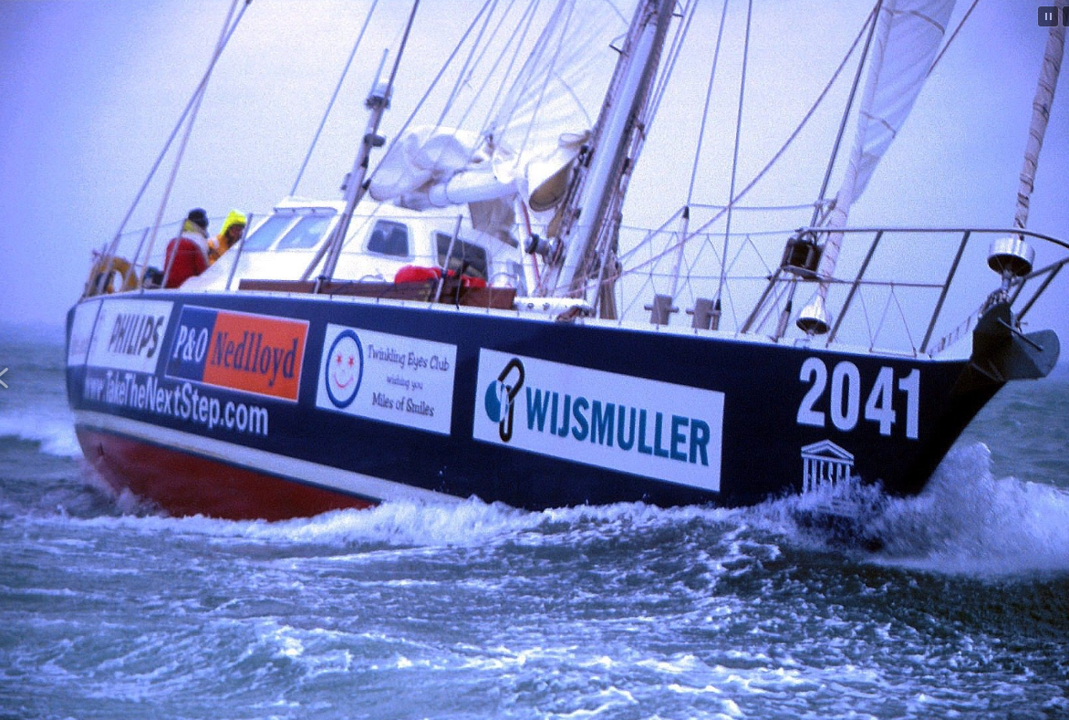
Through donation, Robert received a 67-foot racing yacht, which he christened “2041” and sailed thousands of nautical miles to advocate for sustainability. Before his presentation at the 2002 UN World Summit on Sustainable Development in Johannesburg, he recruited a team to haul the yacht almost 4,000 miles over land across South Africa to generate public awareness around AIDS, water conservation and sustainability.
2003: Competed in the Cape-to-Rio Yacht Race
Ahead of the 2012 World Summit in Rio de Janeiro, Robert sailed 3,500 nautical miles from South Africa to Brazil to advocate for sustainability.
2003-2004: “Circumnavigation of Africa”
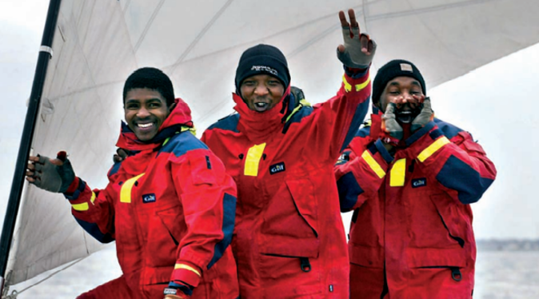
Robert recruited a team to circumnavigate Africa, sailing 23,500 nautical miles to promote AIDS awareness and sustainable living including water conservation and recycling. They visited 30 ports of call in 20 nations, and communities along the way conducted cleanup projects. The crew included three Africans who, to the best knowledge, marked the first African crew in history to circumnavigate their own continent.
2003-2026: The 2041 Foundation leads International Antarctic Expeditions
In 2003, Robert led the first corporate expedition to Antarctica, and he since has led more than a dozen similar expeditions. More than 4,000 people from 90 countries have participated. These Climate Champions have become heads of businesses, government and communities, advocating for the environment to protect our planet.
2004-2005: Competed in Sydney Hobart Yacht Race
The 2041 crew competed in Sydney Hobart Yacht Race, 628 nautical miles, demonstrating the world’s first sails made of recycled plastic bottles and fitted with solar panels. The crew comprised industry leaders and teachers. Despite a major storm, the team finished 24th in the race, and the sails survived.
2008 – 2012: “Voyage for Cleaner Energy”
This global sailing mission demonstrated renewable energy as 2041 operated solely on wind, solar, and biodiesel. The voyage culminated in Robert’s presentation at 2012 Earth Summit in Rio de Janeiro.
2010 – 2014: Bicycling through India
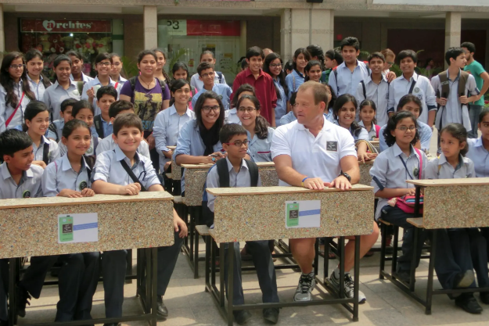
A multi-year bicycling journey through India, covering roughly 4,300 miles (7,000 km). He visited schools and communities to promote sustainability among young people, while connecting protection of the poles to everyday choices in the rest of the world.
2017 – 2018: South Pole Energy Challenge
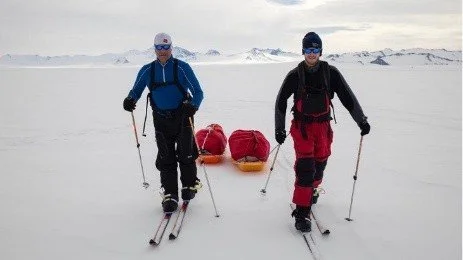
57-day, 600-mile expedition to the South Pole, walking from the opposite direction of “Footsteps” — which would mean Robert cumulatively would have walked across the entire Antarctic landmass. The expedition used only renewable energy sources.
For NASA, the team tested solar ice melters. They also demonstrated biofuels made from waste, lithium batteries, and passive solar flasks for survival. The trek proved the viability of these technologies, even in the world’s harshest environments.
The team also arranged for the planting of tens of thousands of trees across the planet to make the expedition’s logistics and operations carbon negative.
With 300 miles to go, Robert was forced to turn back due to a catastrophic physical injury. His son, Barney, completed the challenge, becoming the first person in history to walk to the South Pole powered solely by renewable energy.
2020: “Last 300” expedition
This trek was intended to cover the remaining miles of Robert’s walk across the Antarctic landmass.
The team demonstrated advanced biofuels as well as gear made from plants, recovered C02 and recycled materials.
With 100 miles to go, Robert experienced another catastrophic hip injury and had to postpone his goal once again.
2023: “Undaunted: South Pole 2023” expedition
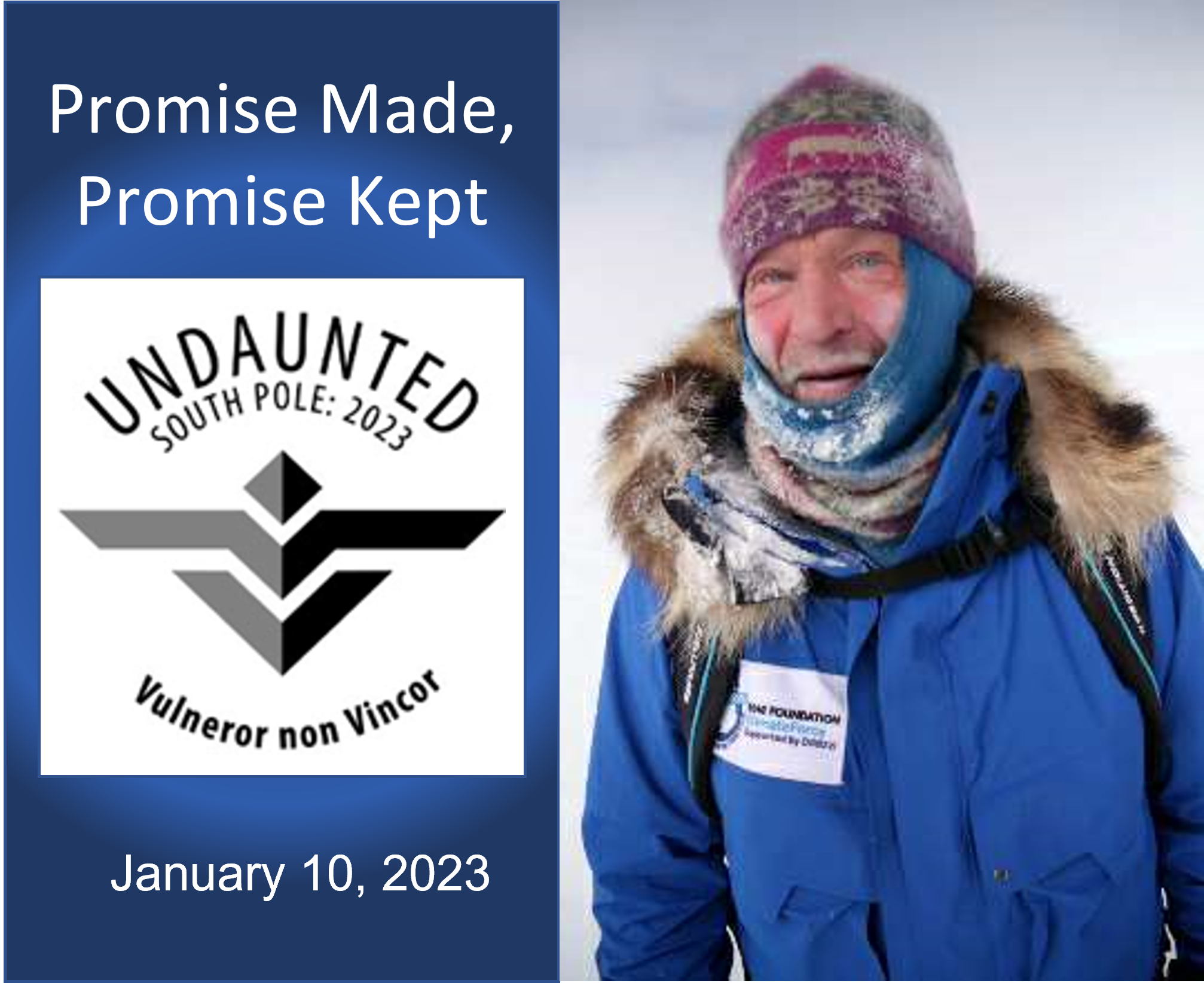
Robert completed the last remaining 100 miles to fulfill his promise to walk across the entire Antarctic landmass.
2025: “Ice Station”
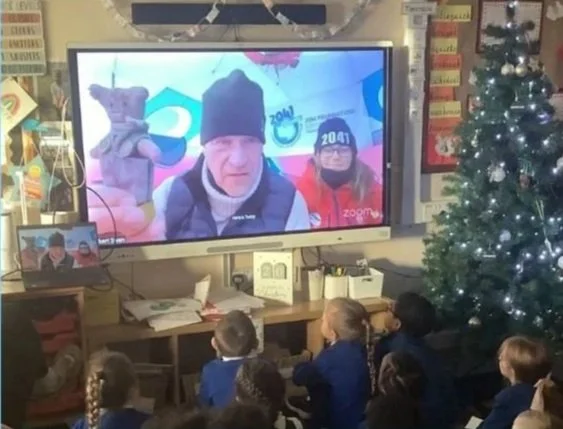
Robert returned to Antarctica to demonstrate sustainable technologies and conduct live educational broadcasts. He addressed 2.1 million school children worldwide in a massive virtual school assembly, in partnership with Oddizzi.com and others.
Select Honors
1988: Received the Polar Medal from Queen Elizabeth II for outstanding achievements in polar research
1989: Appointed UN Environment Program Goodwill Ambassador
1990: Received UN’s Global 500 award
1992: Appointed Goodwill Ambassador for the United Nations Educational, Scientific and Cultural Organization (UNESCO)
1992: Keynote speaker at UN’s first Earth Summit for Sustainable Development, in Rio de Janeiro, Brazil.
1994: Appointed Special Envoy to UNESCO’s Director General
1995: Awarded Officer of the Order of the British Empire (OBE) by Queen Elizabeth II
1998: Received the Smithsonian Award for Information Technology in Education & Academia
2002: Addressed World Summit for Sustainable Development in Johannesburg, South Africa
2012: Addressed World Summit for Sustainable Development in Rio de Janeiro, Brazil
2015: Received the Humanitarian Innovation Lifetime Achievement Award, from the Humanitarian Innovation Fund
2017: Received UN’s NOVUS Award for contributing to Sustainable Development Goals