
Walking into the Explorer’s House on Day 1 of the Leadership on the Edge Expedition felt like the greatest field trip on Earth: part magic portal, part basecamp. There was a kinetic energy of seventy-plus strangers standing on the edge of a life-changing adventure.
Taking in the room, it was humbling to be surrounded by such a remarkable convergence of global perspectives - from corporate transition leaders and catalytic philanthropists to tech innovators, documentary storytellers, climate scientists, and the families who anchor their work. Strangers from wildly different orbits, united by a single magnetic pull toward the bottom of the world.
As a K–12 educator from Singapore, I am used to ecosystems ruled by timetables (classes, activities, and clubs) as well as the boundless curiosity of young people. Stepping into a room of corporate titans and veteran explorers felt like stepping onto a different planet - which, in a way, is exactly where we are headed.
As we prepared for the morning keynotes, Antarctica reminded us who is actually in charge.
Down here, you do not set the itinerary; the weather does. An incoming low-pressure system was headed our way over the next few days, and our expedition leaders from Antarctica21 made an exciting call: we leave tonight.
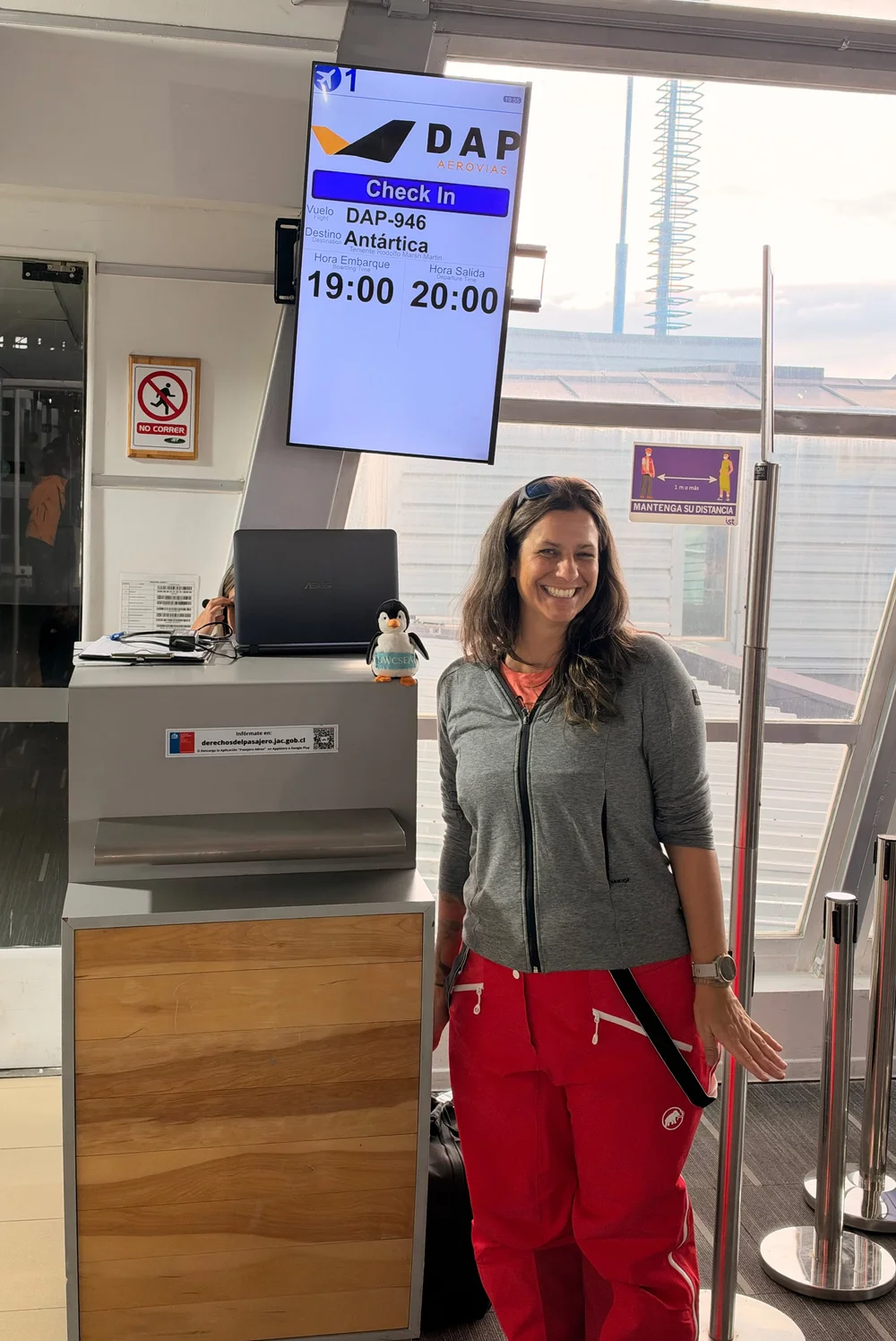
Gaining an unexpected extra twenty-four hours in Antarctica is a gift, but it meant compressing a full Day 1 of preparation into a single morning. We moved through safety briefings, gear fittings, and rigorous biosecurity checks: vacuuming velcro and carefully inspecting seams to ensure not a single foreign hitchhiker makes its way onto the pristine continent.
The morning paired two towering perspectives that framed the emotional heartbeat of this expedition. First came Robert Swan, reminding us why we are here. His life is a testament to audacious adventure, unyielding hope, and the quiet, stubborn promise of what humanity can achieve when we decide to act.
Next, Professor Benjamin Horton took the floor, delivering a provocative, unflinching look at the data of our current climate situation. He laid bare the stark realities of systems in collapse, painting a confronting picture of what lies ahead for our planet and our species. Yet, he refused to leave us in despair. Standing squarely in the reality of climate overshoot, he offered the only viable path forward: climate repair. Sustainability and net-zero are no longer enough; we must actively heal, fix, and restore what we have broken.
Sitting in that small auditorium, feeling the urgency of Professor Horton’s call to repair collide with Robert’s infectious optimism, I thought of my students.
In corporate boardrooms and policy summits, climate change is often treated as a logistical puzzle or a risk-management metric. But in Kindergarten through Grade 12 classrooms, it is deeply personal. It is the literal inheritance of the young people sitting at those desks.
Listening to Professor Horton today reminded me why climate scientists' work is sacred - they hold up the mirror so we cannot look away. Yet, as an educator, I know that fear alone can paralyze us. Data without hope is a dead end. The only true, lasting climate solution lies in youth development, systems thinking, and equipping the next generation not just with the evidence of what is breaking, but with the agency and self-efficacy to repair it.
The central theme of this expedition is: getting outside your tent - stepping out of your comfort zone and walking straight into the cold, uncomfortable spaces where real leadership happens. Today, we didn’t just talk about that philosophy; we lived it at breakneck speed.
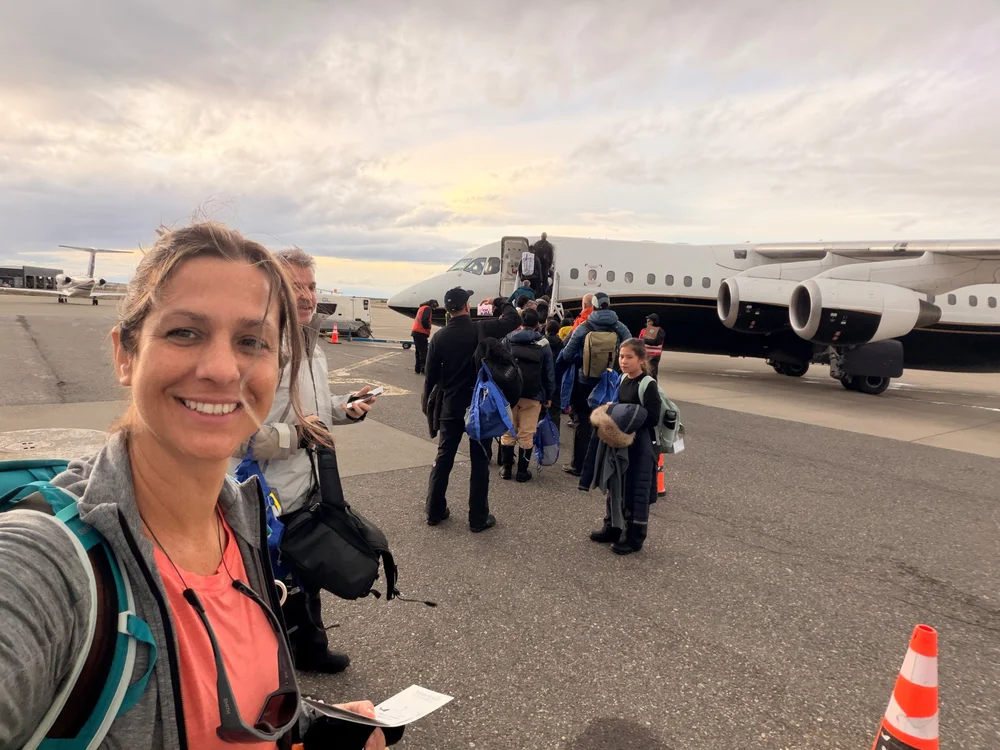
By late afternoon, we were all organized within weight limits, our gear sorted and packed in expedition style. The bus ride hugged the windswept, scenic coast back to the airport. Inside the terminal, the energy had shifted from a slow morning curiosity to a heightened anticipation of the two-hour flight to King George Island. Tonight, around 11:00 PM, we will step off a plane onto the ice and take our very first Zodiac crossing out to the MV Magellan Explorer.
As I look around at my new expedition mates, some double-checking camera lenses, others quietly staring out at the tarmac, I am struck by the sheer beauty of experiential learning. You can read every climate report ever published, and you can build a thousand corporate sustainability decks, but nothing changes a human heart quite like standing on the edge of an adventure in nature, a little bit scared and entirely awake.
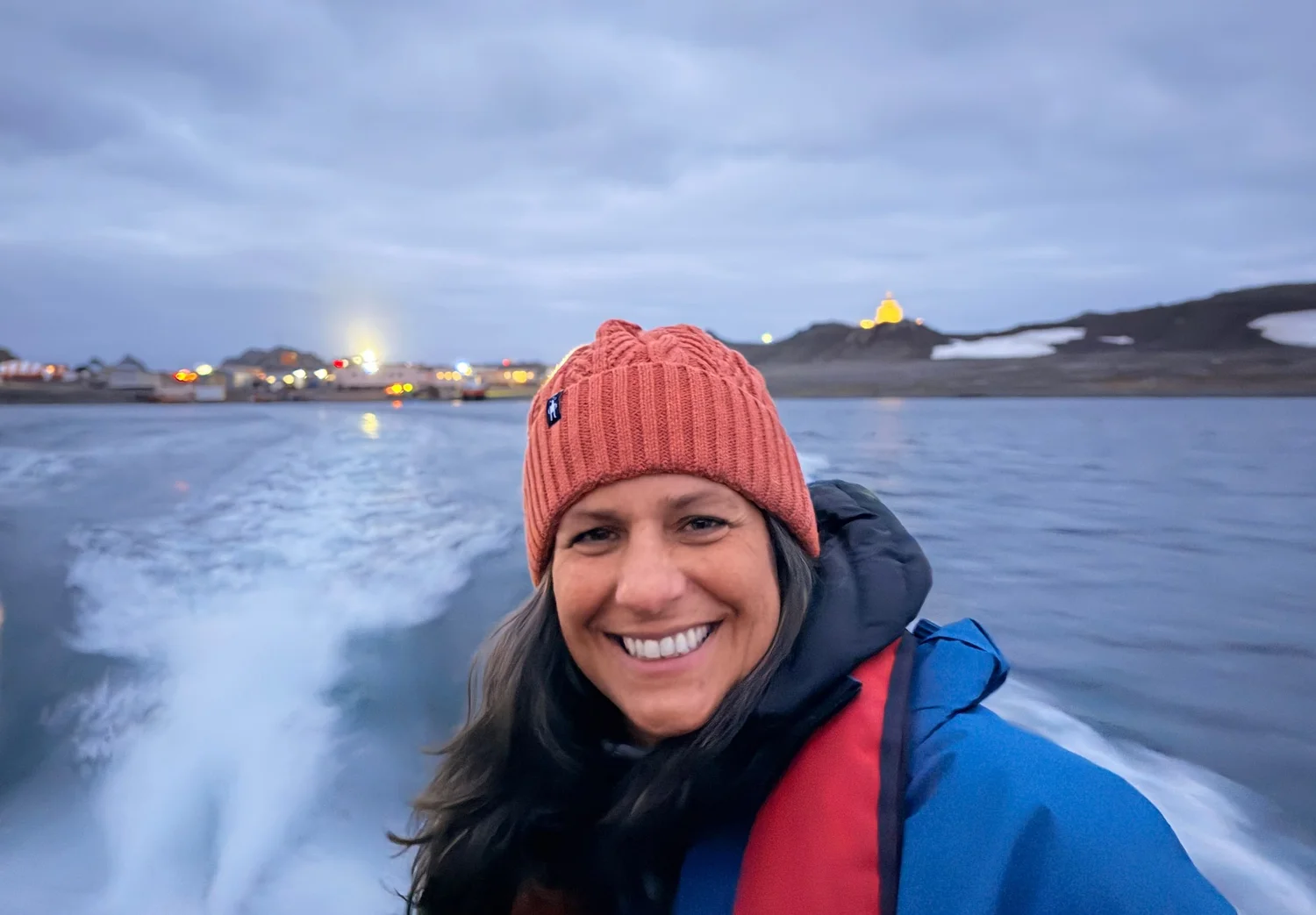
I came on this journey to bring the voice of K–12 education into a room of global decision-makers. But tonight, as we prepare to cross the Drake Passage into the white wilderness, I realize we are all students here. We are stepping outside our tents together, trading comfort for courage, and learning how to protect a world that belongs to all of us.
Antarctica is calling. Let’s go.